


Over the years, relationships have changed, and conversations around open relationships, polyamory, and monogamy have become more commonly discussed. Even though monogamy is the traditional relationship and is often preferred, there are other couples that are looking at different approaches to commitment, connection, and intimacy.
The real question is: what defines commitment and cheating in a relationship? For many couples, being exclusive means a physical and emotional commitment to just one partner. For other types of relationships, though, commitment needs communication, trust, honesty, and clearly agreed-upon boundaries that allow for openness.
The biggest question isn’t whether the relationship is monogamous or non-monogamous; what matters is whether both partners understand and agree to the relationship boundaries they’re creating together.
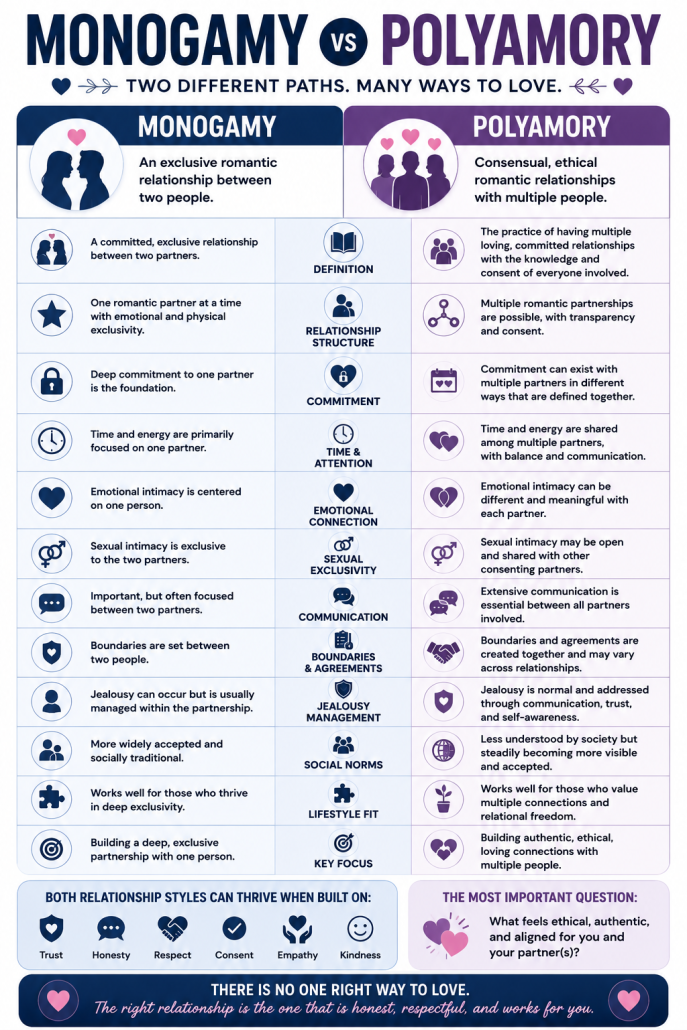
Here are 15 important ideas about monogamy, polyamory, and non-monogamy relationships and healthy relationship dynamics:
1. Monogamy Looks Different for Every Couple
A lot of people think that monogamy means exactly the same thing for everyone, but relationships often work differently depending on the couple and what both people are comfortable with emotionally. Some couples see:
• Emotional loyalty is the most important.
• Physical exclusivity is non-negotiable.
• Flirting is disrespectful.
• Emotional attachment outside the relationship is more threatening than physical attraction.
Because everyone defines boundaries differently, assumptions can easily create misunderstandings and emotional conflict.
2. Polyamory Depends on Honesty and Consent
Polyamory usually refers to consensual relationships where people have emotional or romantic connections with more than one partner. Healthy polyamorous relationships rely on things like:
• Honesty.
• Communication.
• Emotional transparency.
• Respect for boundaries.
• Mutual agreement.
Without open communication and emotional honesty, non-monogamous relationships can quickly become emotionally unhealthy.
3. Open Relationships Are Not Automatically Cheating
One of the biggest misunderstandings about open relationships is assuming they are automatically the same as infidelity. The biggest difference is consent and honesty. Cheating usually involves things like:
• Secrecy.
• Dishonesty.
• Hidden behavior.
• Breaking relationship agreements.
Ethical non-monogamy, on the other hand, involves boundaries and expectations that are openly discussed and agreed on by everyone involved.
4. Communication Matters in Every Relationship
No matter what type of relationship someone has, communication is still one of the most important parts of emotional connection and trust. Healthy couples often talk openly about things like:
• Emotional expectations.
• Boundaries.
• Jealousy.
• Insecurities.
• Long-term goals.
• Comfort levels.
Avoiding difficult conversations usually creates confusion, resentment, and emotional distance later.
5. Cheating Is Usually About Broken Trust
For many people, cheating is not only about physical intimacy. The deepest pain often comes from betrayal, secrecy, and dishonesty.
Things like this can cause emotional trust to be damaged more than a physical behavior:
• Hiding conversations.
• Emotional affairs.
• Lying.
• Secret behavior.
• Breaking agreements.
6. Jealousy Exists in Every Type of Relationship
Some people assume jealousy only happens in open relationships, but monogamous couples experience jealousy too. Jealousy can come from things like:
• Fear of abandonment.
• Emotional insecurity.
• Lack of reassurance.
• Poor communication.
• Past betrayal.
Healthy relationships usually handle jealousy through honesty and emotional conversation instead of shame or secrecy.
7. Emotional Connection Still Matters Most
Even in relationships that allow openness, emotional intimacy is still extremely important. Most people still need things like:
• Emotional support.
• Affection.
• Trust.
• Vulnerability.
• Reassurance.
• Quality time together.
Relationships often start struggling when emotional closeness disappears, no matter what the relationship structure is.
8. Clear Boundaries Prevent Confusion
Many couples assume they automatically agree on boundaries when they actually have very different expectations emotionally. Healthy couples should be able to talk about things like:
• Exclusivity.
• Friendships with exes.
• Social media boundaries.
• Outside attraction.
• Privacy expectations.
• Dating apps.
Clarity often prevents emotional misunderstandings and conflict later.
9. Open Relationships Require Emotional Maturity
Some people think open relationships are easier or less serious, but they often require very strong emotional communication and self-awareness. Couples working through being more open might need to handle things like:
• Jealousy.
• Emotional insecurity.
• Trust issues.
• Boundaries.
• Scheduling.
• Reassurance and communication.
Without emotional maturity and honesty, open relationships can become emotionally unstable very quickly.
10. Monogamy Still Feels Right for Many People
Even though conversations around polyamory have become more common, many people still deeply value monogamous relationships. Some couples want things like:
• Emotional exclusivity.
• Long-term stability.
• Deep emotional bonding.
• Simplicity within the relationship.
• Shared intimacy and commitment.
Healthy monogamy is not outdated. It simply reflects a different relationship preference and emotional need.
11. Relationships Can Change Over Time
Some couples remain monogamous forever, while others explore openness later in life. Some relationships might shift between different dynamics depending on things like:
• Life circumstances.
• Emotional growth.
• Communication.
• Mutual agreement.
Healthy relationships usually evolve through communication and honesty instead of rigid expectations.
12. Conversations About Sexual Health Matter
Open and honest conversations about sexual health are important in every relationship, especially when multiple partners may be involved. Healthy discussions might include things like:
• STI testing.
• Safer sex practices.
• Condom use.
• Emotional comfort levels.
• Transparency about intimacy outside the relationship.
These conversations help create emotional safety, trust, and respect.
13. Outside Judgment Can Create Pressure
Non-traditional relationships are often judged or misunderstood socially. At the same time, monogamous couples may feel pressure to appear perfect even when privately struggling emotionally.
Healthy relationships usually work best when the people in the relationship focus more on their own emotional well-being instead of outside opinions.
14. Emotional Safety Matters Most
No matter what relationship style someone chooses, emotional safety is still one of the strongest foundations of a healthy relationship. Partners should feel:
• Heard.
• Respected.
• Emotionally safe.
• Comfortable being vulnerable.
• Able to discuss fears and emotional needs openly.
Without emotional safety, emotional trust becomes difficult to maintain long-term.
15. There Is No Single “Right” Relationship Model
One of the biggest truths about relationships is that there is no universal formula that works for everyone.
Some people feel happiest in monogamous relationships. Others feel more fulfilled in ethical non-monogamy. What matters most is if the relationship is built on things like:
• Consent.
• Honesty.
• Respect.
• Communication.
• Emotional maturity.
• Shared understanding.
Healthy relationships are usually the ones where both people feel emotionally valued, supported, and respected.
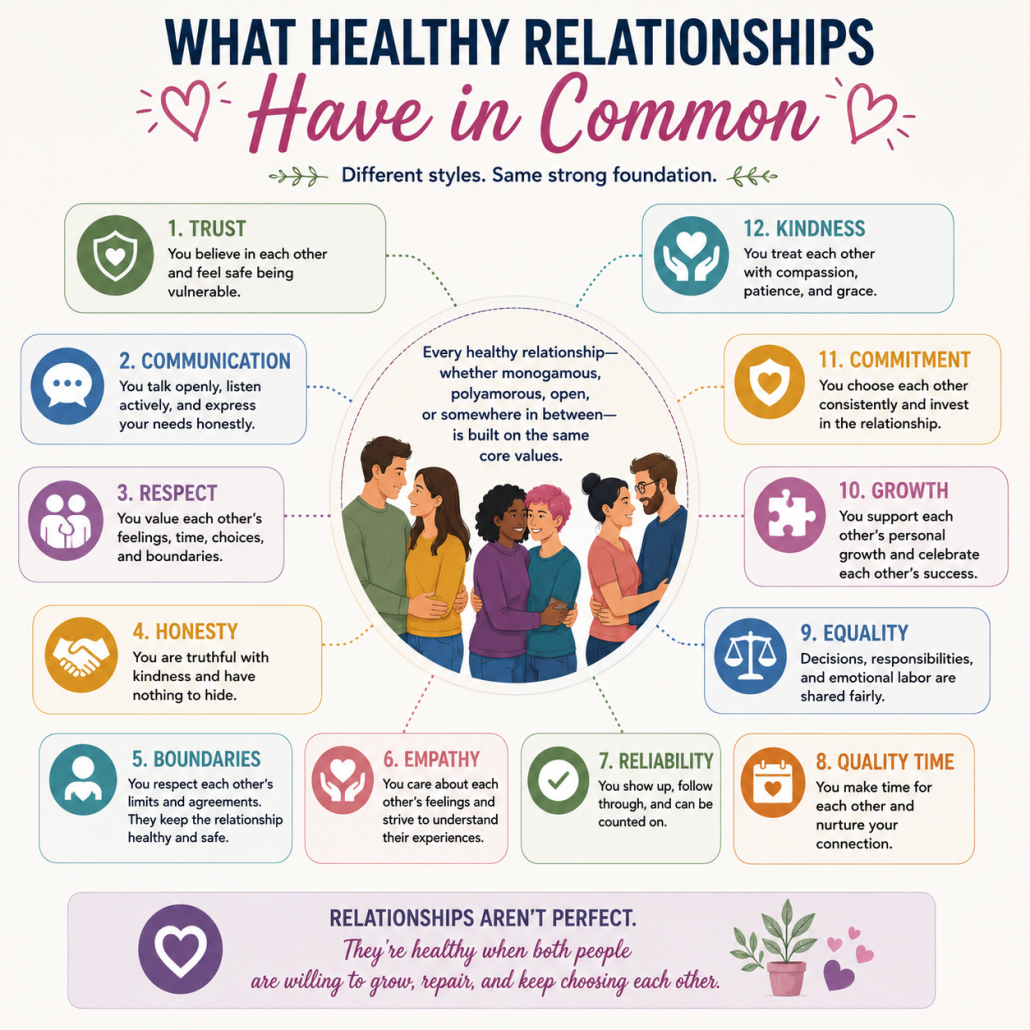
Final Thoughts: Healthy or Unhealthy Relationships
Monogamy or polyamory doesn’t automatically mean a healthy or unhealthy relationship. What matters in a good relationship is how the couple respects boundaries, keeps trust, supports each other, and communicates.
Infidelity isn’t just about a physical situation; in many situations, it’s about dishonesty, breaking agreements, betrayal, and secrecy. Healthy relationships, no matter what kind they are, need communication, empathy, emotional safety, mutual respect, and honesty.
The healthiest relationships aren’t ones without problems, but they’re relationships where both partners feel secure, heard, and able to communicate openly about their needs and boundaries.
Frequently Asked Questions
1. What is the main difference between monogamy and polyamory?
Monogamy usually means having one romantic or intimate partner at a time, while polyamory involves having multiple consensual romantic relationships with the knowledge and agreement of everyone involved.
2. Is polyamory the same as cheating?
No. Cheating involves secrecy or broken agreements. Polyamory is based on consent, honesty, communication, and clear relationship agreements.
3. Can monogamous relationships be healthy?
Yes. Monogamous relationships can be very healthy when they include trust, respect, communication, emotional safety, and mutual commitment.
4. Can polyamorous relationships be healthy?
Yes. Polyamorous relationships can be healthy when everyone involved gives informed consent, communicates openly, respects boundaries, and feels emotionally safe.
5. Which relationship style is better?
Neither style is automatically better. The healthiest relationship style is the one that is honest, respectful, consensual, and aligned with the people involved.
6. Why do some people prefer monogamy?
Some people prefer monogamy because they value exclusivity, simplicity, tradition, emotional focus, or building a long-term partnership with one person.
7. Why do some people prefer polyamory?
Some people prefer polyamory because they value multiple emotional connections, relationship flexibility, open communication, and non-exclusive forms of love.
8. Can jealousy happen in both monogamy and polyamory?
Yes. Jealousy can happen in any relationship style. What matters is how partners communicate, reassure each other, and handle insecurity.
9. What makes a relationship structure work?
A relationship structure works when everyone understands the agreements, feels respected, communicates honestly, and is free to express their needs.
10. What are healthy boundaries in modern relationships?
Healthy boundaries include clear expectations around time, intimacy, communication, privacy, emotional needs, and what each person considers acceptable.
11. Is communication more important in polyamory?
Communication is important in every relationship. In polyamory, communication may need to be more frequent and detailed because more people and agreements are involved.
12. Can a monogamous person date a polyamorous person?
It can happen, but it requires honest conversations about expectations, emotional needs, exclusivity, boundaries, and whether both people can truly feel secure.
13. What is ethical non-monogamy?
Ethical non-monogamy is an umbrella term for consensual relationship styles where partners agree that romantic or intimate connections with more than one person are allowed.
14. What is the biggest challenge in polyamory?
Common challenges include time management, jealousy, communication overload, unclear agreements, and making sure everyone feels valued and respected.
15. What is the biggest challenge in monogamy?
Common challenges include unrealistic expectations, emotional dependency, routine, communication issues, and assuming exclusivity alone will keep the relationship strong.
16. Can polyamory include commitment?
Yes. Polyamory can include deep commitment, long-term love, emotional responsibility, and serious partnerships, depending on the agreements involved.
17. Can monogamy include freedom and independence?
Yes. Healthy monogamy can include personal space, independence, friendships, individual goals, and freedom within mutually respected boundaries.
18. How do I know which relationship style fits me?
Think about your emotional needs, values, comfort with exclusivity, communication style, boundaries, and what kind of relationship makes you feel secure and authentic.
19. Should couples revisit relationship agreements over time?
Yes. Relationship agreements should be revisited as people grow, needs change, and life circumstances shift.
20. What do all healthy relationships have in common?
Healthy relationships usually share trust, honesty, consent, respect, communication, empathy, emotional safety, and a willingness to grow together.